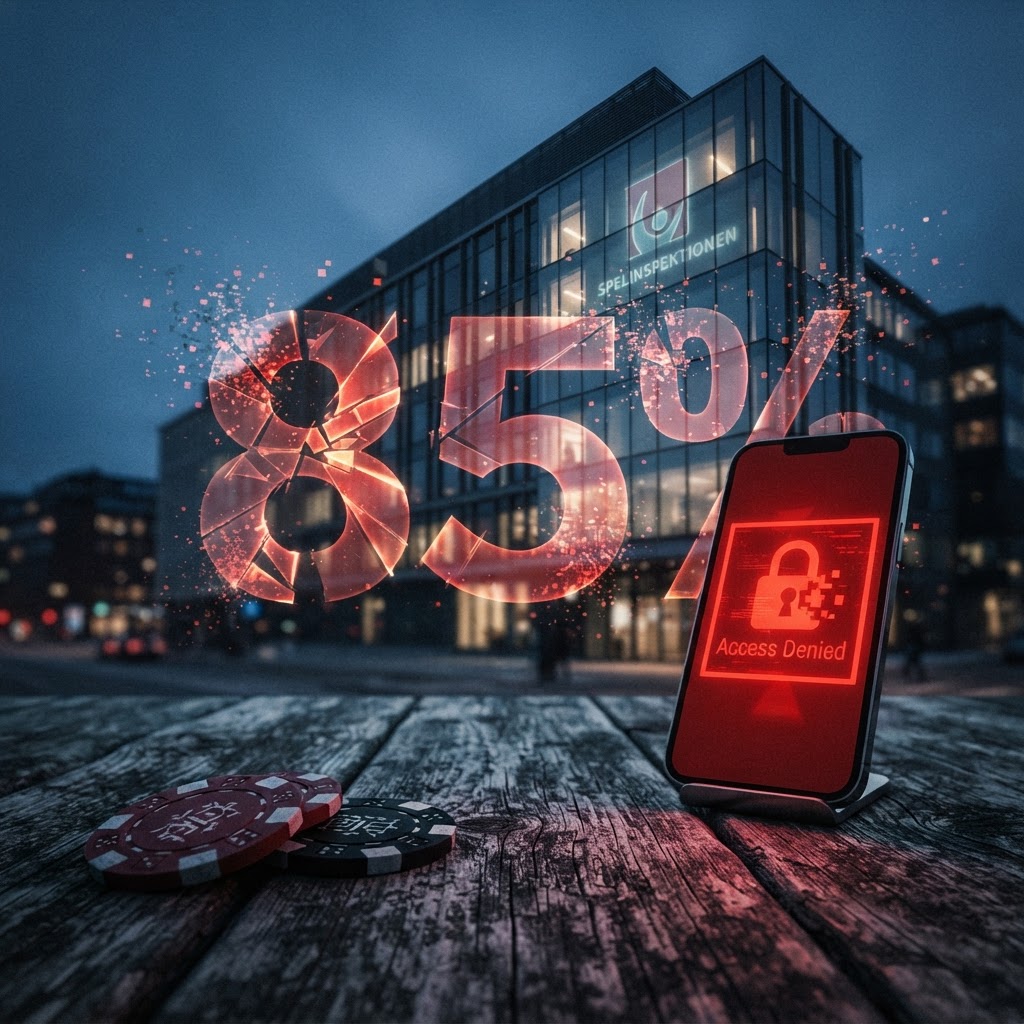
The numbers are in, and they aren't pretty for the Swedish Gambling Authority. Spelinspektionen’s latest assessment pegs the market’s channelization rate at 85% for 2024, a slide from the 86% reported in 2023. While a single percentage point might sound like a rounding error to a bureaucrat, in the high-stakes world of iGaming, it’s a flashing red light. It signals that the regulatory walls built to keep players within the licensed ecosystem are becoming porous. That’s a problem because the black market isn't just waiting in the wings; it’s actively eating into the margins of operators who pay the taxes and follow the rules.
The Reality of the Grey Market
Here’s the thing: the licensed market is being squeezed from both sides. On one hand, you have the regulator tightening the screws with new SIFS 2025:1 rules and an impending ban on credit-based gambling set for April 2026. On the other, you have unlicensed operators who don't care about KYC, AML, or the Swedish Gambling Act. They operate in English, accept euros, and bypass the friction that licensed operators are forced to implement. When you make the legal experience harder, you don't just protect players; you push them toward the path of least resistance. The data bears this out. Online casino, the most lucrative vertical, is struggling the most, with channelization rates estimated between 72% and 82%. Betting remains more resilient at 92% to 96%, but the overall trend is undeniable.
What’s striking is the disconnect between the regulator’s official figures and the industry’s lived experience. Trade bodies like BOS and major operators like ATG have long argued that the real channelization rate is significantly lower—potentially between 70% and 80%. If the industry is right, the regulator is essentially flying blind, using a methodology that ignores the sheer volume of traffic flowing to offshore sites. The decision to drop H2 Gambling Capital’s data from the official assessment might have been an attempt to simplify the narrative, but it feels more like an attempt to ignore the elephant in the room. You can change the math, but you can't change the market.
A Market in Transition
Meanwhile, the financial performance of the licensed sector remains tepid. Q3 2025 revenue hit SEK6.71 billion, a meager 0.5% year-on-year increase. That’s barely keeping pace with inflation, let alone justifying the massive compliance costs operators are absorbing. Svenska Spel and ATG are reporting growth, but they are the incumbents with deep roots. For the smaller, international operators trying to carve out a share in Sweden, the environment is becoming hostile. The closure of Casino Cosmopol wasn't just a business decision; it was a symbolic end to an era of state-run land-based dominance. Now, the focus is entirely on the digital space, where the battle for the player is being lost to sites that don't pay a single krona in Swedish tax.
So what does this mean for the future? The government has initiated a review of the Gambling Act, and Minister for Financial Markets Niklas Wykman has promised a more appropriate framework. But talk is cheap. Unless the review addresses the overregulation of the legal market, the channelization rate will continue its slow, steady decline. Operators are tired of being the only ones playing by the rules while the black market thrives on the sidelines. If the regulator doesn't find a way to make the licensed experience more competitive, they won't just be losing 1% a year. They’ll be presiding over a hollowed-out market where the only winners are the offshore providers who never had to play by the rules in the first place.